collective writing / testimony / photography / documentary / poetry / archive
2023 — ongoing (work in progress)
This crime is not worth poetry.
From the text by Yevgenija, Bucha, 2025
The large-scale russian invasion of Ukraine has been ongoing for nearly 4 years. People there are experiencing not only an ongoing attack on their physical existence but also an assault on their consciousness. This project seeks to document the undocumentable — experiences that are neither captured by the media, documentary photography, nor NGO work — and creates an archive of testimonies at the intersection of documentation and poetry.
What counts as a crime against humanity? —not only in the legal sense, but in relation to existential violations. This is the central question of the project.
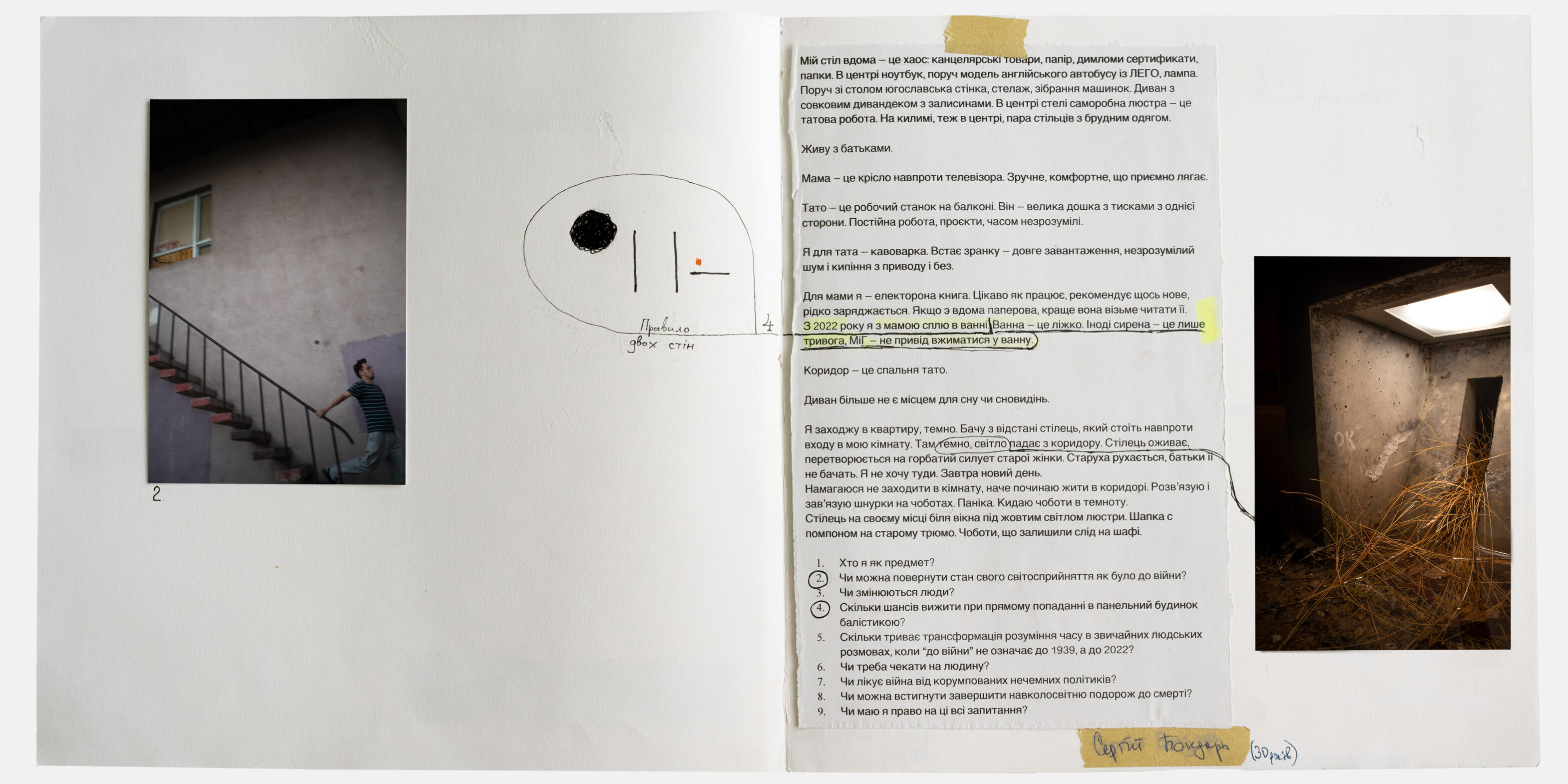
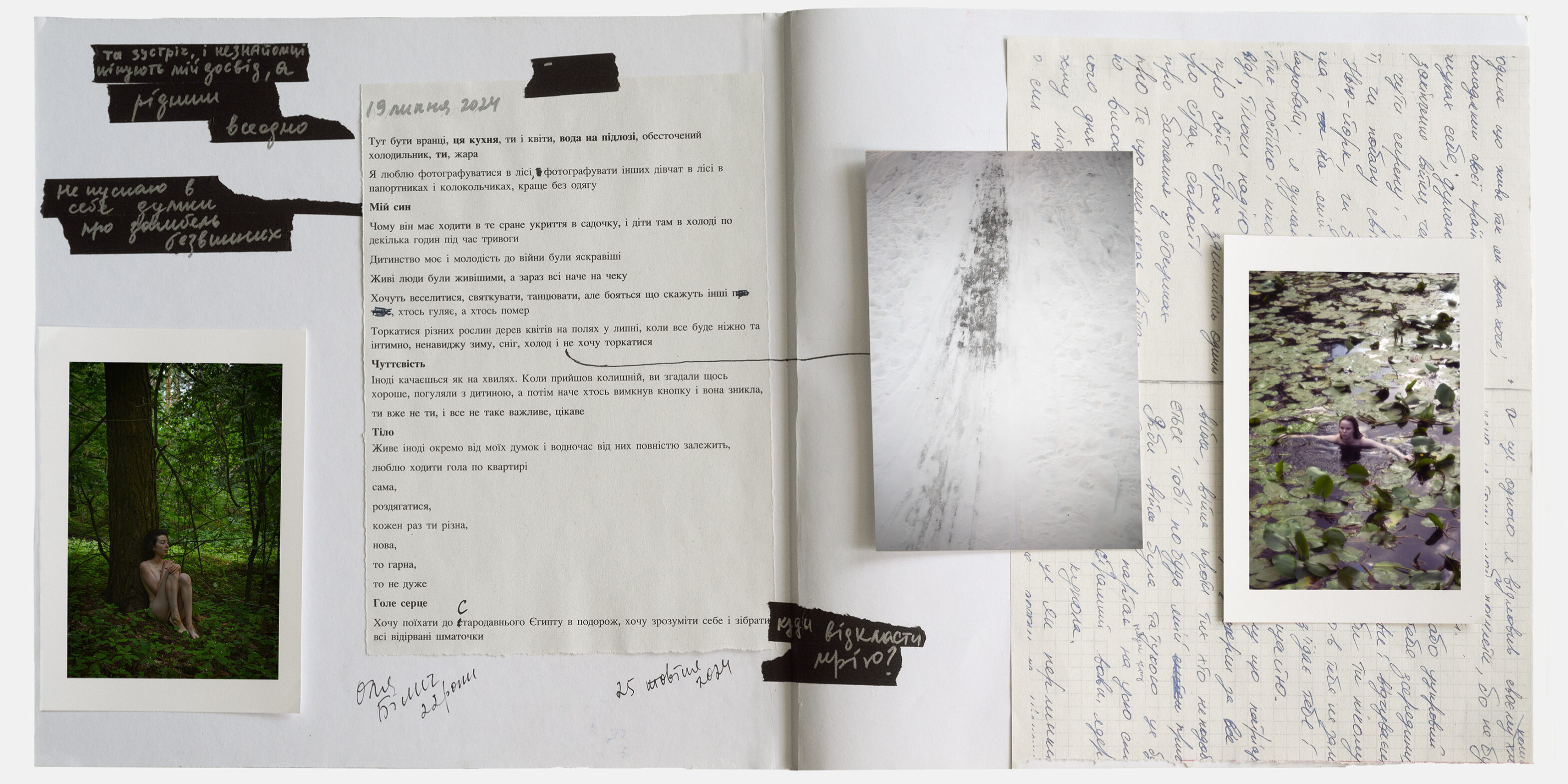
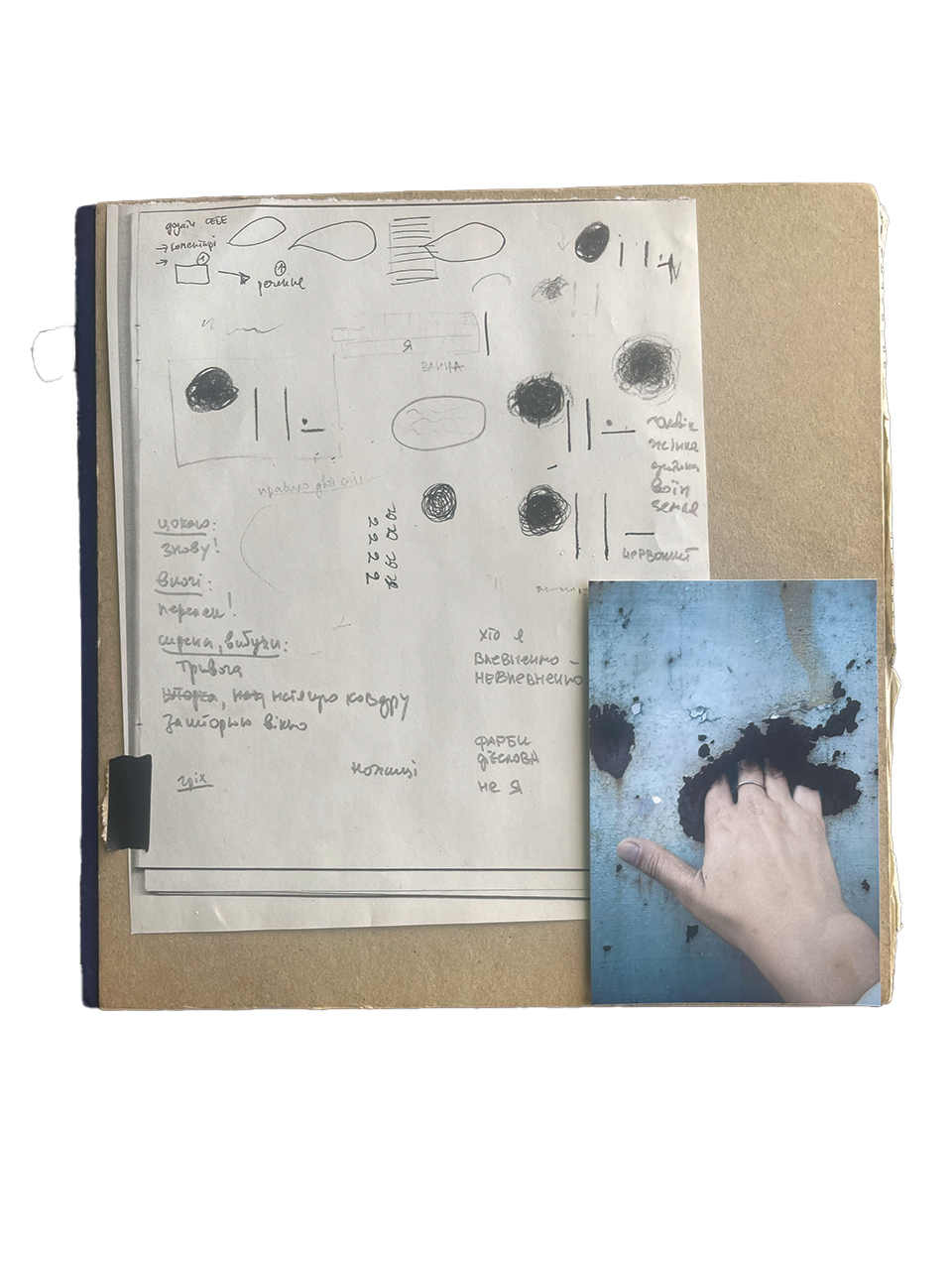
These are visual and poetic statements developed and realized in co-authorship with 35 people in Ukraine over three years of the russian invasion. They document not only personal circumstances but also give a sense of deep disruptions of body, morality, consciousness and self-perception.
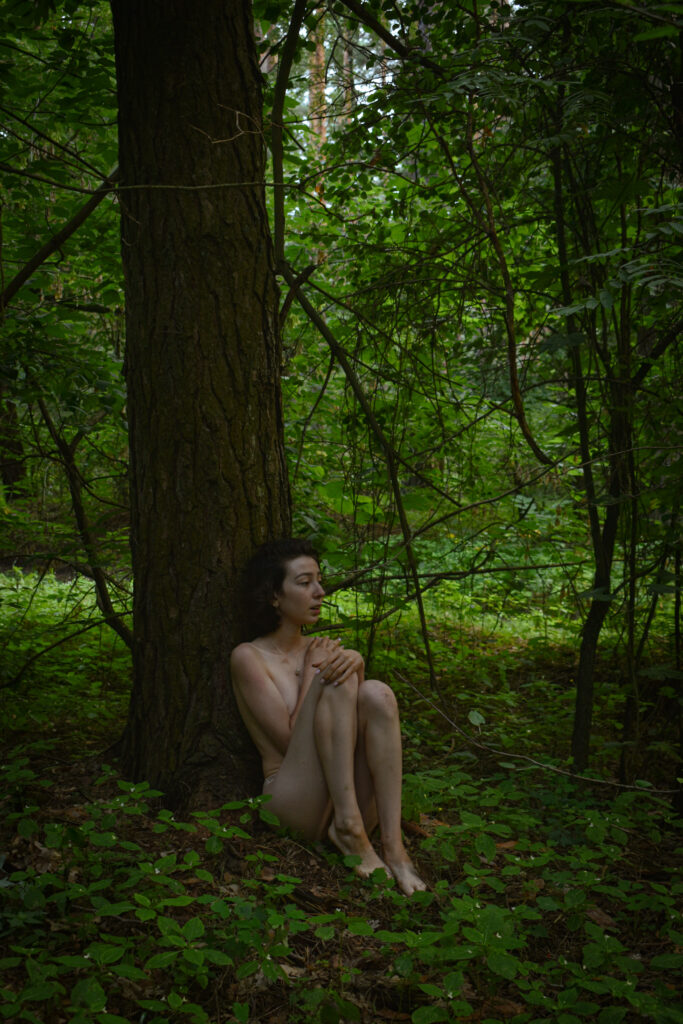
Every person involved in this process is invited — regardless of prior experience in writing literary texts — to write spontaneously using writing techniques from contemporary poetry that I suggest: free verse, rhythmic prose, confessional writing, graphic poetry, and other forms. At the same time, we exchange photographs: participants propose their own images—documentary or associative — which then become part of their testimony. Then, I go back to Berlin. Once the texts are shortened and edited there — in co-authorship with philologist and artist Marianna Paller — I add my own photographic work and return to Ukraine. There, the participants further revise their texts and comment on the relationship between their testimony and my photography. Although the resulting montage of text and image is collective, the statement remains essentially documentary and testimonial.
The work offers people without direct experience of war a way to engage with the conflict, whose reality can no longer be fully understood through existing frameworks — such as a clear front line or a strict separation between civilians and the military — and simultaneously makes central, invisible forms of violence visible, which elude direct representation. The horror of war is essentially unrepresentable; it becomes a frame within which life unfolds, where rocket attacks, club life, death, daily life and state of emergency coexist.